


Can a 4-Year-Old Really Learn the Flute?

Updated: Aug 18
Why Readiness Matters More than Age

"Isn't four too young to learn the flute?"
This is one of the questions I hear most often from parents and teachers. While the short answer is yes—a four-year-old can absolutely begin learning the flute—the better question is: Are they ready?
One of the most important things I've learned from teaching young children is that age is only one small part of the story. Two four-year-olds can have completely different attention spans, coordination, confidence, and curiosity. One child may be eager to explore an instrument, while another may benefit from waiting another year. Rather than focusing on a child's age, I like to look for signs of readiness.
A child who can follow simple directions, take turns, focus on one activity for a few minutes, and enjoys singing, moving, pretending, and exploring new ideas may be ready to begin their musical journey. Those qualities often tell us much more than the number on a birthday cake.
When people picture flute lessons, many imagine reading music, learning fingerings, and playing songs almost immediately. That simply isn't what "little flute" pedagogy looks like.
Young beginners often spend weeks—or even months—exploring just the headjoint. They discover how to make long sounds, short sounds, high sounds, low sounds, wavy sounds, and whirly-twirly roller coaster sounds. They experiment with air, listen carefully, solve musical puzzles, and celebrate each new discovery. They aren't waiting to learn the flute—they are learning the flute, one joyful step at a time. That's the heart of "little flute" pedagogy.
This is where play becomes such an important part of the learning process. For young children, play isn't a reward after learning; it is the learning. When children pretend to blow out birthday candles, send feathers dancing through the air, or imagine Goldi searching for her beautiful flute sound, they are developing breath control, listening skills, coordination, creativity, and confidence. Those playful experiences become the foundation for everything that follows.
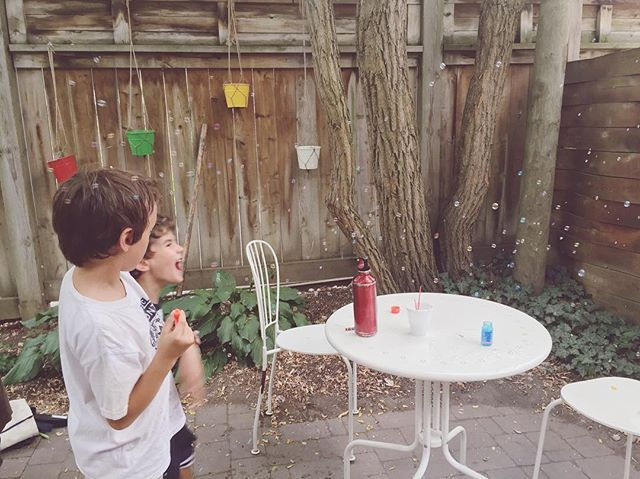
Activities like blowing bubbles help young children explore breath in a way that feels natural, playful, and meaningful.
Because of this, I don't believe there is one perfect age to begin learning the flute. Some children are ready at four. Others may be ready at six, eight, or even older. The goal isn't to start as early as possible. The goal is to begin when a child is ready to experience joy, success, and confidence through music.
So, can a four-year-old really learn the flute?
Absolutely.
With the right instrument, developmentally appropriate teaching, and a playful approach, many young children can build a wonderful foundation for lifelong music making. "Little flute" pedagogy isn't about asking children to do more at a younger age. It's about meeting them where they are and discovering music in ways that make sense for young learners. After all, the goal isn't simply to start early—it's to help children fall in love with making music.
📌 Key Takeaway: Readiness matters more than age.
🧰 Signs Your Child May Be Ready to Learn the Flute
Every child develops differently, and there is no single "right" age to begin the flute. Instead of focusing on birthdays, look for signs that a child is ready to learn. A young beginner may be ready if they:
Enjoy singing, moving, and imaginative play.
Can follow one- or two-step directions.
Are able to focus on one activity for 5–10 minutes.
Show curiosity about music and instruments.
Can take turns and participate in simple games.
Are excited to try something new, even if it feels challenging.
Remember, children don't need to check every box. This list is simply a guide to help parents and teachers think about readiness as a whole rather than focusing on age alone.
📚 Keep Exploring
Continue your little flute journey with these articles:
What Kind of Flute Should a Young Child Start On?
💬 Library Notes
Borrowed an idea from this article? We'd love to hear how it worked for you. When you've had a chance to try it, come back and leave a note in the comments. Your story may be just the encouragement another family or teacher needs.


Comments